Sprinkler Head Calculator: Flow, Coverage & Quantity Estimator
Plan your irrigation system with precision. Estimate the flow rate (GPM) per head, coverage diameter, and the total number of sprinkler heads required for a given zone. This tool helps you match heads to your pressure and spacing needs, ensuring uniform watering and minimal waste.
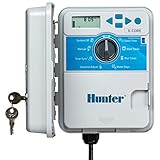
List of the Best Sprinkler Controller:




Comprehensive Guide to Sprinkler Head Selection & System Design
Designing an efficient sprinkler system starts with selecting the right sprinkler heads. This guide covers everything you need to know about sprinkler head types, flow rates, coverage diameters, spacing, and precipitation rates. Whether you're planning a new system or upgrading an existing one, understanding these fundamentals ensures even water distribution, healthy plants, and lower water bills.
Understanding Sprinkler Head Flow Rate (GPM)
The flow rate of a sprinkler head is measured in gallons per minute (GPM) and is determined by the nozzle size and operating pressure. Spray heads typically have flow rates between 1.0 and 4.0 GPM, while rotors can range from 3.0 to 15.0 GPM or more. Drip emitters are measured in gallons per hour (GPH) and are converted to GPM by dividing by 60. Matching flow rates to your system's capacity is critical: if total zone flow exceeds your water supply, you'll experience pressure drops and poor performance. Use the flow rate per head and the number of heads to calculate total zone demand.
| Head Type | Typical Flow (GPM) | Coverage Diameter (ft) | Typical Pressure (PSI) | Best Use |
|---|---|---|---|---|
| Spray / Fixed-head | 1.0 – 4.0 | 8 – 18 | 30 – 40 | Small to medium lawns, flower beds |
| Rotor / Gear-driven | 3.0 – 15.0 | 25 – 50 | 40 – 60 | Large lawns, sports fields |
| Impact / Impulse | 5.0 – 20.0 | 30 – 70 | 40 – 60 | Agricultural, large open areas |
| MP Rotator / Rotary nozzle | 0.5 – 3.0 | 15 – 35 | 30 – 50 | Medium lawns, low precipitation rate |
| Drip / Micro-irrigation | 0.01 – 0.1 (GPM) | 1 – 3 (per emitter) | 20 – 30 | Garden beds, trees, shrubs |
Coverage Diameter & Spacing
Coverage diameter is the distance water travels from the sprinkler head. Proper spacing ensures head-to-head overlap, which provides uniform coverage. The standard recommendation is to space heads at 60% of their diameter for rectangular layouts, and 65% for triangular/staggered patterns. For example, a rotor with a 40-foot diameter should be spaced 24 feet apart (40 × 0.6). In windy areas or on slopes, reduce spacing to 50% to compensate for drift and runoff. Our calculator uses the spacing factor you select to estimate the number of heads needed for a given zone area.
Precipitation Rate: How Fast Does Water Apply?
Precipitation rate (in/hr) is the depth of water applied per hour. It depends on the head flow rate and the spacing between heads. For a rectangular spacing, the formula is: Precipitation Rate (in/hr) = (GPM × 96.3) ÷ (Spacing (ft) × Row Spacing (ft)). For triangular spacing, the formula adjusts with a constant. Typical precipitation rates: sprays 1.5–2.0 in/hr, rotors 0.8–1.5 in/hr, MP Rotators 0.4–0.8 in/hr. Matching the precipitation rate to your soil's infiltration rate prevents runoff. Clay soils need lower rates, while sandy soils can handle higher rates.
Our calculator estimates precipitation based on your head flow, spacing, and area. If the calculated rate is higher than your soil can absorb, consider using lower-flow heads or increasing spacing (within recommended limits).
Pressure & Performance
Pressure (PSI) is a key factor in sprinkler performance. Too low, and the head won't pop up or throw water effectively; too high, and you'll experience misting, fogging, and uneven coverage. Most spray heads perform best at 30–40 PSI, while rotors need 40–60 PSI. Pressure loss in pipes, fittings, and elevation changes reduces the pressure available at the head. Our calculator includes a pressure loss input to help you account for these factors. If your pressure is below the recommended range, consider adding a booster pump or reducing the number of heads per zone.
| Head Type | Optimal Pressure (PSI) | Minimum Pressure (PSI) | Effect of Low Pressure | Effect of High Pressure |
|---|---|---|---|---|
| Spray | 30 – 40 | 20 | Poor pop-up, reduced radius | Misting, fogging, overspray |
| Rotor | 40 – 60 | 30 | Slow rotation, reduced stream | Excessive misting, seal damage |
| Impact | 40 – 60 | 25 | Loss of rotation, reduced throw | Water hammer, noisy operation |
| MP Rotator | 30 – 50 | 25 | Reduced stream, poor rotation | Misting, reduced efficiency |
Estimating the Number of Sprinkler Heads
The number of heads required for a zone depends on the zone area, head spacing, and layout pattern. For a rectangular zone with rows and columns, the number of heads is approximately: Area ÷ (Spacing × Row Spacing). Our calculator uses the coverage diameter and spacing factor to compute the effective spacing in both directions and then estimates the head count. For irregular shapes, you may need more heads to cover odd corners. Always add 5–10% extra heads for complex designs.
Choosing the Right Sprinkler Head for Your Landscape
Selecting the right head type is crucial for efficiency. Spray heads are best for small, irregularly shaped areas and deliver a quick, high-rate application. Rotors are ideal for large, open lawns and provide a slower, more uniform application. MP Rotators offer the best of both worlds: low precipitation rates, great uniformity, and reduced runoff. Drip irrigation is the most efficient for garden beds, shrubs, and trees, delivering water directly to the root zone with minimal loss. Consider your soil type, slope, and plant water needs when choosing heads.
Common Design Mistakes
- Mixing head types on the same zone: Spray and rotor heads have different precipitation rates, leading to over- or under-watering.
- Incorrect spacing: Too wide causes dry spots; too close leads to overspray and waste.
- Ignoring pressure losses: Long pipe runs or small-diameter pipes can drop pressure significantly, reducing head performance.
- Using spray heads on large areas: Sprays are less efficient for big lawns; rotors or MP Rotators are better.
- Not accounting for wind: Wind distorts spray patterns; reduce spacing in windy regions.
- Oversizing nozzles: Larger nozzles increase flow but may exceed system capacity.
Advanced Design: Matched Precipitation Rates
For optimal uniformity, use heads with matched precipitation rates across the zone. This means all heads apply water at the same rate, regardless of arc or radius. Many manufacturers offer nozzles that are matched for a given pressure. For example, a rotor with a 180° arc should have half the flow of a 360° head to maintain uniform application. Our calculator uses the head flow you input, but be sure to select matched nozzles for your design.
Sprinkler Head Calculator: How to Use the Results
The calculator provides several key outputs: estimated flow per head, total zone flow, coverage diameter adjusted for spacing, recommended number of heads, precipitation rate, and spacing recommendations. Use these values to design your zone layout. If the total zone flow exceeds your water supply (e.g., 15 GPM max), reduce the number of heads or choose lower-flow nozzles. If the precipitation rate is too high, consider increasing spacing (within limits) or switching to a lower-rate head type.
Remember, the calculator is a planning tool. Always verify with manufacturer specifications and perform a catch-can test after installation to fine-tune run times.
Water Conservation and System Efficiency
Proper head selection and spacing are the foundation of water-efficient irrigation. By designing for uniform coverage and matching precipitation to soil type, you can reduce runoff and deep percolation losses. Adding a rain sensor and smart controller further optimizes watering schedules. Regular maintenance—cleaning nozzles, adjusting heads, and checking for leaks—keeps your system performing at its best.
Frequently Asked Questions About Sprinkler Heads
How do I choose between spray and rotor heads?
Spray heads are best for small, irregular areas (under 15–20 ft) and provide a quick application. Rotors are for large, open spaces (25–50 ft) and have lower precipitation rates, reducing runoff. MP Rotators are a good compromise for medium areas.
What does "head-to-head" spacing mean?
It means the spray from one head reaches the next head. This ensures even coverage with no dry spots. The recommended distance is typically 60–70% of the diameter.
Can I mix different brands of sprinkler heads?
Yes, but ensure they have similar precipitation rates and pressure requirements. Mixing unmatched heads can lead to uneven watering.
How many heads can I run per zone?
It depends on your water flow and pressure. Divide your available flow (GPM) by the flow per head to get the maximum number. Also, check pressure at the farthest head.
What is the ideal precipitation rate for my lawn?
Most lawns need 1.0–1.5 inches per week. A precipitation rate of 1.0–1.5 in/hr is typical for rotors, and 1.5–2.0 for sprays. Adjust run time to meet weekly needs.
How does pressure loss affect head performance?
Pressure loss reduces the flow and radius of each head. Use larger pipes or shorter runs to minimize loss. Our calculator accounts for this with the pressure loss input.
Final Thoughts on Sprinkler Head Design
Designing an efficient sprinkler system requires careful selection of head types, spacing, and pressure management. The Sprinkler Head Calculator empowers you to make data-driven decisions, saving water and ensuring a lush, healthy landscape. Use the results as a blueprint, and always fine-tune with on-site testing. Happy irrigating!