Sprinkler Flow Rate Calculator: Estimate GPM & System Capacity
Calculate the flow rate (GPM) of individual sprinkler heads or entire zones. Estimate total system flow, water usage, and precipitation rate. This tool helps you design efficient irrigation systems that match your water supply capacity.
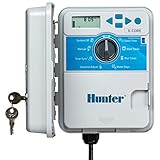
List of the Best Sprinkler Controller:




Comprehensive Guide to Sprinkler Flow Rate & System Design
Flow rate is one of the most critical measurements in irrigation system design. Measured in gallons per minute (GPM), it determines how much water your system can deliver, how many heads you can run per zone, and how efficiently your landscape is watered. Understanding flow rate helps you design a system that matches your water supply, prevents pressure loss, and saves water. This guide covers everything from measuring flow rate to calculating system capacity and optimizing performance.
What is Sprinkler Flow Rate?
Flow rate (GPM) is the volume of water passing through a sprinkler head or system per minute. It is determined by the nozzle size, operating pressure, and the number of heads in a zone. Flow rate directly impacts:
- Water usage: Higher flow = more water applied per minute.
- System capacity: The total flow of all zones must not exceed your water supply.
- Precipitation rate: Flow rate combined with spacing determines how fast water is applied.
- Cost: Higher flow systems use more water, increasing utility bills.
How to Measure Flow Rate
There are several ways to measure sprinkler flow rate:
- Bucket Test: The simplest method. Place a 5-gallon bucket under a sprinkler head, time how long it takes to fill, and calculate GPM = 5 ÷ fill time (seconds) × 60. This measures the actual flow at your specific pressure.
- Flow Meter: Install a flow meter on your main line for precise, continuous measurement of your entire system.
- Manufacturer Specs: Use the flow rate chart provided by the sprinkler head manufacturer, which shows GPM at different pressures for each nozzle size.
- Water Meter: Note your water meter reading, run a zone for a set time, and read again. Subtract the start value to get total gallons used, then divide by minutes.
| Measurement Method | Accuracy | Tools Needed | Best For |
|---|---|---|---|
| Bucket Test | Good (±10%) | Bucket, timer | Single head flow, quick check |
| Flow Meter | Excellent (±2%) | Flow meter | Continuous monitoring, whole system |
| Manufacturer Charts | Good (if pressure known) | Nozzle chart, pressure gauge | Design stage, head selection |
| Water Meter | Excellent (±1%) | Water meter, timer | Total zone flow, system capacity |
Understanding K-Factor and Flow Coefficient
The K-factor (or flow coefficient) is a value that relates flow rate to pressure for a specific nozzle. The formula is: GPM = K × √PSI. For example, if a nozzle has a K-factor of 0.5, at 40 PSI the flow rate is 0.5 × √40 = 0.5 × 6.32 = 3.16 GPM. This relationship allows you to calculate flow at different pressures, which is useful when designing systems with varying pressure conditions. Our calculator includes a K-factor input for single head calculations.
Typical Flow Rates by Head Type
| Head Type | Typical Flow (GPM) | Typical Pressure (PSI) | K-Factor Range |
|---|---|---|---|
| Spray / Fixed-head (1/4" nozzle) | 1.5 – 3.0 | 30 – 40 | 0.25 – 0.50 |
| Spray (5/16" nozzle) | 2.5 – 4.5 | 30 – 40 | 0.40 – 0.75 |
| Rotor / Gear-driven (small) | 3.0 – 6.0 | 40 – 50 | 0.50 – 0.85 |
| Rotor (large) | 6.0 – 15.0 | 45 – 60 | 0.85 – 2.00 |
| MP Rotator / Rotary nozzle | 0.5 – 3.0 | 30 – 50 | 0.10 – 0.45 |
| Drip / Micro (per emitter) | 0.01 – 0.10 | 20 – 30 | 0.002 – 0.020 |
Calculating Zone Flow and System Capacity
The total flow of a zone is the sum of the flow rates of all heads in that zone. For example, a zone with 6 spray heads, each at 2.5 GPM, has a total zone flow of 15 GPM. The available flow from your water supply (typically 10–20 GPM for residential systems) determines the maximum number of heads you can run per zone. Exceeding available flow causes pressure loss, reduced coverage, and poor performance. A good rule of thumb is to design zones to use no more than 75% of your available flow to allow for pressure losses.
Precipitation Rate and Flow
Precipitation rate (in/hr) is calculated using flow rate and the area covered by the heads. The formula is: Precipitation Rate = (Total GPM × 96.3) ÷ Area (sq ft). This tells you how fast water is applied. For example, a zone with 15 GPM covering 3,000 sq ft has a precipitation rate of (15 × 96.3) ÷ 3000 = 0.48 in/hr. This rate helps determine run time: to apply 1 inch of water, you would run the zone for 1 ÷ 0.48 = 125 minutes. Understanding this relationship helps you schedule watering efficiently.
Flow Rate and Water Usage
Flow rate directly impacts water usage and cost. The calculator estimates:
- Gallons per watering event: Flow rate × run time
- Monthly usage: Gallons per event × days per week × 4 weeks
- Yearly usage: Gallons per event × days per week × weeks per year
- Cost: Usage (gallons) ÷ 1000 × cost per 1000 gallons
For example, a single head at 3 GPM running 15 minutes uses 45 gallons per event. Over 3 days a week for 26 weeks, that's 45 × 3 × 26 = 3,510 gallons per year. At $2.50 per 1000 gallons, the annual cost is about $8.78 for that single head. Multiply by all heads in your system to see total cost.
Flow Rate and System Design
When designing a sprinkler system, flow rate is the foundation of your design. Here are key design principles:
- Measure your available flow: Use a bucket test or water meter to determine your maximum GPM.
- Design zones to match flow: Each zone's total flow should not exceed 75–80% of your available flow.
- Select appropriate nozzles: Choose nozzles that provide the flow and coverage you need at your operating pressure.
- Consider pressure losses: Pipe size, length, fittings, and elevation changes all reduce pressure and flow.
- Plan for future changes: Leave some capacity for system expansion or additional features.
Common Flow Rate Mistakes
- Assuming manufacturer specs are accurate: Actual flow depends on your specific pressure; measure it!
- Mixing heads with different flow rates: Different flows on the same zone lead to uneven watering.
- Ignoring pressure losses: Flow decreases with pressure loss; calculate pressure at the head.
- Overloading zones: Too many heads per zone reduce pressure and performance.
- Not accounting for water source capacity: Well pumps and municipal supplies have limits; know yours.
Using the Sprinkler Flow Rate Calculator
Our calculator offers three modes to accommodate different needs:
- Single Head Flow: Enter nozzle size, pressure, and K-factor to calculate individual head flow.
- Zone / Multiple Heads: Enter the number of heads and flow per head to calculate total zone flow.
- Bucket Test: Enter bucket size and fill time to measure actual flow rate from a head.
All modes also estimate water usage, cost, and precipitation rate (if area is provided). The results help you understand your system's performance and identify optimization opportunities.
Flow Rate and Water Conservation
Understanding flow rate is the first step to water conservation. By knowing your system's flow, you can:
- Optimize run times: Avoid overwatering by matching run time to your lawn's needs.
- Identify inefficiencies: High flow in one area may indicate broken heads or leaks.
- Upgrade to efficient heads: MP Rotators and low-flow nozzles reduce water use.
- Adjust watering schedules: Use precipitation rate to schedule watering based on weather and season.
- Detect problems early: Unexpected changes in flow can indicate system issues.
Frequently Asked Questions About Sprinkler Flow Rate
What is a good flow rate for a residential sprinkler system?
Most residential systems have 10–20 GPM available. Design zones with a total flow of 8–15 GPM to allow for pressure losses.
How do I measure flow rate with a bucket?
Place a 5-gallon bucket under the sprinkler head, time how many seconds it takes to fill, then calculate GPM = 5 × 60 ÷ seconds.
What affects sprinkler flow rate?
Nozzle size, operating pressure, pipe size, friction losses, elevation changes, and water source capacity all affect flow.
How does pressure affect flow rate?
Flow increases with pressure. The relationship is GPM = K × √PSI. Higher pressure = higher flow, but also more misting and waste.
What is a K-factor?
The K-factor is a flow coefficient that relates flow rate to pressure. It is specific to each nozzle and used to calculate GPM at any pressure.
How many heads can I run per zone?
Divide your available GPM by the flow per head. For example, 15 GPM available ÷ 2.5 GPM per head = 6 heads maximum per zone.
Why is my flow rate lower than expected?
Possible causes: pressure loss in pipes, partially closed valves, clogged nozzles, or insufficient water supply. Check pressure at the head.
Can I increase flow rate without changing heads?
Increasing pressure (within head limits) increases flow. You can also clean clogged nozzles or replace worn components.
Advanced Flow Rate Calculations
For system designers, understanding flow rate extends to hydraulics. Consider these advanced factors:
- Friction Loss: Flow through pipes creates friction, reducing pressure at the head. Use pipe sizing charts to minimize loss.
- Elevation Change: Each foot of elevation change affects pressure by 0.433 PSI. Higher elevations require higher pressure to maintain flow.
- Water Hammer: Sudden stops in flow can cause pressure spikes; use slow-closing valves and air chambers.
- System Curve: The relationship between flow and pressure in your system; used for pump selection.
Final Thoughts on Flow Rate
Flow rate is the heartbeat of your irrigation system. By accurately measuring and understanding it, you can design a system that delivers water efficiently, saves money, and keeps your landscape healthy. Use our calculator as a starting point, but always verify with real-world measurements. Regular monitoring helps you detect problems early and maintain peak performance. Happy irrigating!